
Blackjack. The name itself conjures images of smoky casinos, high-stakes drama, and the tantalizing possibility of beating the house. Unlike many casino games that rely purely on chance, Blackjack offers a unique blend of skill and luck, a combination that has captivated players for generations. From its humble beginnings to its current status as a casino staple, Blackjack has proven to be more than just a game; it’s a cultural phenomenon. But what exactly accounts for this enduring appeal? Why does Blackjack continue to draw in players, both seasoned pros and curious newcomers, decade after decade?
This is not just another article recounting the rules of Blackjack. Here, will be explored the deeper reasons behind its timelessness. Delving into the psychology of the game, the strategic elements that empower players, and the social aspects that make it a shared experience. Prepare to uncover the secrets of Blackjack’s enduring popularity. Find out why this casino classic remains a thrilling and relevant pastime in an ever-evolving world of entertainment.
A Brief History of Blackjack: From France to Global Phenomenon
Blackjack, a casino staple recognized worldwide, boasts a history richer and more intriguing than many realize. Its narrative begins in the raucous gambling halls of 17th-century France, where it was known as “Vingt-et-Un,” meaning “twenty-one.” This early version, like its modern descendant, challenged players to reach a point total of 21 without exceeding it, pitting them against the house in a battle of wits and luck.
From France, Vingt-et-Un spread like wildfire through the gambling houses of Europe, evolving and adapting as it crossed borders. Different regions introduced their own rules and nuances, contributing to the game’s ever-changing character. However, the core objective—reaching 21—remained constant, ensuring the game’s enduring appeal.
The game eventually made its voyage across the Atlantic, landing in the burgeoning casinos of America. Initially, Vingt-et-Un struggled to gain traction amongst gamblers favoring other games. To boost its popularity, gambling houses introduced bonus payouts, one of which offered a ten-to-one payout for a hand containing the Ace of Spades and a black Jack (either the Jack of Clubs or the Jack of Spades). This bonus, though short-lived, inadvertently gave the game its now-iconic name: Blackjack.
Even though the specific bonus payout tied to the black jack disappeared, the name itself stuck, forever linking the game to its American introduction. Today, Blackjack’s journey from a French parlor game to a global phenomenon stands as a testament to its simple rules, strategic depth, and the timeless thrill of gambling. It has evolved throughout time to become a famous world wide known game.
The Fundamentals of Blackjack: Rules, Gameplay, and Basic Terminology
Blackjack, a casino staple, challenges players to outsmart the dealer by building a hand value as close to 21 as possible without exceeding it. This deceptively simple game blends chance and strategy, captivating players worldwide. Understanding the core rules, card values, and basic actions is crucial for anyone looking to try their luck at the Blackjack table.
Objective: Beat the Dealer
The primary goal in Blackjack is not necessarily to reach 21, but to have a hand value higher than the dealer’s without going over. If a player’s hand exceeds 21, it’s a “bust,” and they automatically lose, regardless of the dealer’s hand.
Card Values
Each card in Blackjack holds a specific value:
- Number Cards (2-10): These cards are worth their face value. For instance, a 7 of hearts is worth 7 points.
- Face Cards (Jack, Queen, King): Each face card is worth 10 points.
- Ace: An Ace can be worth either 1 or 11 points, depending on which value benefits the player the most. If a player has an Ace and a 6, their hand could be valued at either 7 or 17.
Basic Actions: Mastering Your Options
During a Blackjack hand, players have several actions at their disposal:
- Hit: To “hit” means to request another card from the dealer. Players typically hit when their hand value is low and they need to get closer to 21.
- Stand: Choosing to “stand” means the player doesn’t want any more cards. This is usually done when the player has a hand value they’re comfortable with.
- Double Down: Doubling down allows a player to double their initial bet in exchange for receiving only one more card. This is a risky move usually performed when a player has a strong hand, like 11.
- Split: If a player is dealt two cards of the same value (e.g., two 8s), they can choose to “split” them into two separate hands. They must then place a second bet equal to their original bet.
For example, imagine a player is dealt a King and a 5, giving them a hand value of 15. They might choose to “hit” in hopes of getting a card that will bring them closer to 21 without busting. Alternatively, if a player is dealt a 10 and a 7, totaling 17, they would likely choose to “stand” because another card could easily push them over 21.
Why Blackjack Endures: Skill, Strategy, and the Illusion of Control
Blackjack’s enduring appeal in the world of casino games stems from a unique blend of factors that set it apart from pure games of chance. Unlike the spin of a roulette wheel or the roll of dice, Blackjack offers players a sense of agency, a feeling that their decisions genuinely matter. This perceived control, coupled with the game’s strategic depth and relatively favorable odds, is a potent combination that keeps players coming back for more.
The element of skill is paramount. Mastering basic Blackjack strategy significantly reduces the house edge, tilting the odds ever so slightly in the player’s favor. Understanding when to hit, stand, double down, or split pairs requires learning and application, turning the game into a mental exercise rather than a passive pursuit. This strategic depth is a major draw for those who enjoy intellectual challenges.
While luck inevitably plays a role in the cards dealt, Blackjack rewards informed decision-making. Players actively assess the situation, considering their own hand, the dealer’s upcard, and the probabilities involved. This active participation creates the illusion, and sometimes the reality, of influencing the outcome. This feeling of control, more than any other factor, is perhaps the secret to Blackjack’s lasting power. It allows players to believe they can outsmart the house, turning a game of chance into a battle of wits.
Blackjack Strategy: Mastering the Game
Blackjack isn’t just about luck; it’s about strategy. Understanding and implementing effective Blackjack strategies can significantly reduce the house edge and boost your chances of winning. While luck always plays a role, mastering the fundamentals and exploring advanced techniques can transform you from a casual player to a serious contender. Two of the most discussed strategies are basic strategy and card counting. Basic strategy offers a mathematically optimal approach to each hand, while card counting, though more complex, attempts to track the ratio of high to low cards remaining in the deck.
Basic Strategy Explained
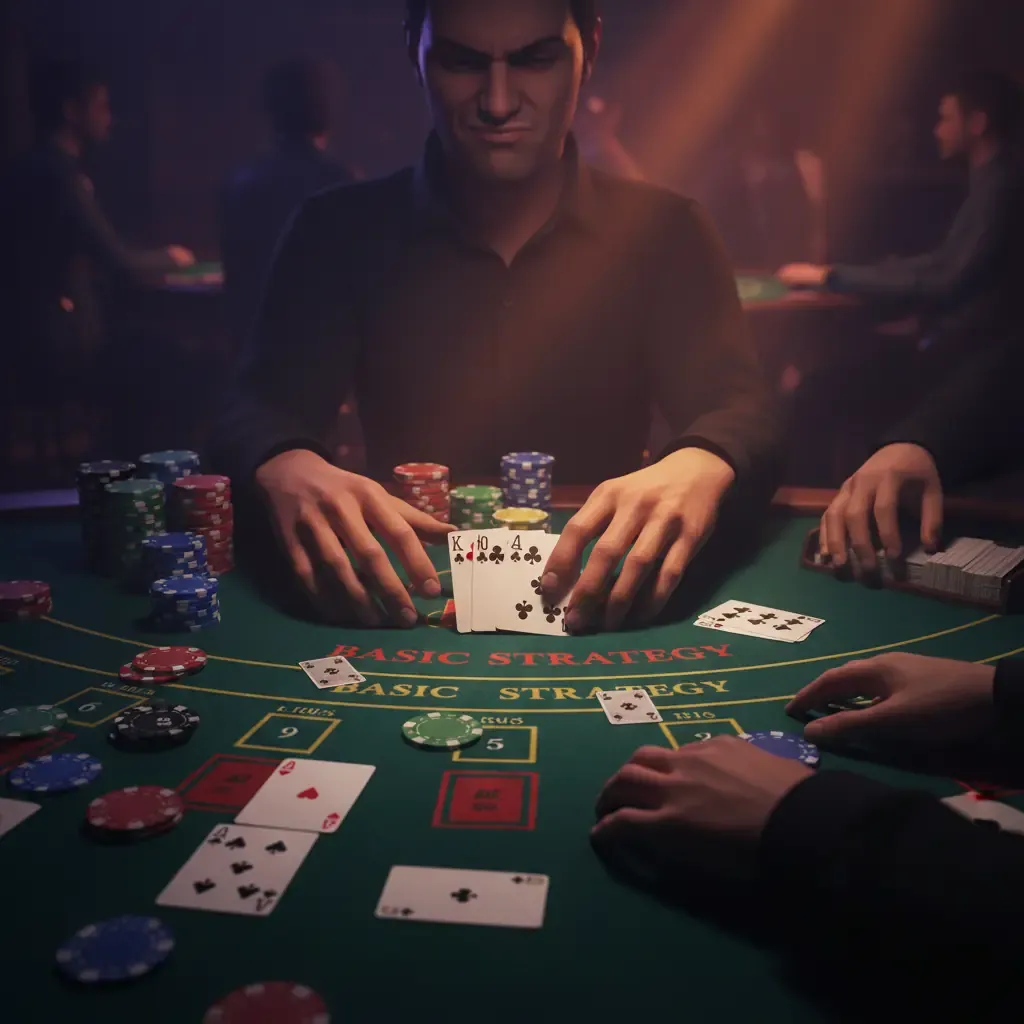
Basic strategy is the cornerstone of informed Blackjack play. Developed through rigorous computer simulations, it dictates the optimal action (hit, stand, double down, split) for every possible combination of your hand and the dealer’s upcard. By consistently following basic strategy, you’re making the mathematically best decision each time, minimizing potential losses and maximizing potential gains. While the precise origins of basic strategy are debated, its widespread adoption revolutionized the game, proving that Blackjack isn’t purely a game of chance. Instead, the chart provides players with a concrete guide that can help them raise their probabilities of winning by making well-informed moves instead of relying solely on a gut feeling.
Card Counting
Card counting is a more advanced technique aimed at gaining an edge by tracking the ratio of high cards (10s, face cards, Aces) to low cards (2-6) remaining in the deck. The premise is simple: a deck with a higher proportion of high cards favors the player, as it increases the likelihood of hitting Blackjack and improves the player’s odds when doubling down or splitting pairs. Several different card counting methodologies exist, each with its own degree of complexity. Though effective, card counting demands intense concentration, excellent memory skills, and the ability to make rapid calculations under pressure. It’s important to note that while not illegal, card counting is often frowned upon by casinos, and players suspected of counting cards may be asked to leave.
Common Mistakes and How to Avoid Them
Blackjack, while seemingly simple, is a game riddled with potential pitfalls for the unprepared. Recognizing common misplays and cultivating the right mental state are crucial for improving your odds and enjoying the game responsibly. Many beginners fall into the trap of blindly following basic strategy charts without understanding the underlying logic. This leads to rigid decision-making, ignoring subtle cues and table dynamics that experienced players intuitively grasp. Another frequent error is chasing losses, increasing bet sizes in a desperate attempt to recoup lost money. This reckless behavior often stems from a lack of discipline and a flawed understanding of probability. Instead of succumbing to emotional impulses, players should adhere to a pre-determined bankroll management strategy and accept that losses are an inherent part of the game. Furthermore, many make the mistake of not paying attention to the dealer’s upcard, thus not making the best decision to play with the hand that they have. Maintaining focus is also a must, so letting alcohol or other factors take over are not a good idea.
Biggest Misplays When On Tilt
Playing “on tilt” – that is, letting emotions dictate your decisions – is a recipe for disaster. In these situations, players often abandon sound strategy, making impulsive bets and irrational choices. If you find yourself becoming frustrated or angry, take a break immediately. Step away from the table, clear your head, and only return when you can approach the game with a calm and rational mindset. To prevent the tilt, make sure you have a strategy and understand you can win back only if you implement that strategy. Accept that bad beats are inevitable and do not let them cloud your judgement.
Understanding the Mental and Emotional Risks of Playing Blackjack
Blackjack, and casino games in general, can pose significant mental and emotional risks. For some, the thrill of the game can become addictive, leading to compulsive gambling behaviors. Recognizing the signs of addiction is paramount. If you find yourself preoccupied with gambling, chasing losses, or experiencing negative consequences in your personal or professional life, seek help immediately. Many resources are available, including support groups and professional counseling. Remember, responsible gambling involves setting limits, sticking to a budget, and understanding that it should be a source of entertainment, not a means of financial gain.
The Evolution of Blackjack: Variations and Innovations
Blackjack, a casino staple, hasn’t remained static. It’s a game that’s constantly evolving, adapting to player preferences and technological advancements. This evolution has led to a diverse range of Blackjack variations, each offering a unique twist on the classic formula.
One popular variation is Spanish 21. Played without the four 10s in the deck, it significantly alters the odds, favoring the house in some ways but also offering players more liberal rules, such as re-doubling and late surrender. Blackjack Switch presents a different dynamic, allowing players to switch the top cards dealt to each of their two hands, opening up strategic possibilities and potentially turning losing hands into winners. Progressive Blackjack adds a jackpot element, where players can place a side bet for a chance to win a large sum if they hit a specific hand combination.
The rise of online Blackjack has further fueled innovation. Online platforms offer a wider array of Blackjack variants than traditional casinos, easily accessible. Live dealer Blackjack provides an immersive experience, blending the convenience of online play with the feel of a real casino. These innovations not only keep the game fresh and exciting but also ensure its continued relevance in an ever-changing entertainment landscape.
Blackjack in the Modern Era: Online and Mobile Platforms
The digital revolution has profoundly impacted the world of gambling, and blackjack is no exception. Online casinos have brought the thrill of the game directly to players’ fingertips, offering convenience and accessibility like never before. Platforms offering online blackjack have exploded in popularity, presenting virtual tables around the clock.
Mobile blackjack apps have further amplified this trend, allowing enthusiasts to indulge in their favorite card game on smartphones and tablets. This accessibility, while a significant benefit, also presents challenges. The ease of access can potentially lead to overspending and addiction for some individuals.
However, regulated online casinos also often provide tools and resources to promote responsible gambling, such as deposit limits and self-exclusion options. Ultimately, the modern era of online and mobile blackjack demands a balanced approach, appreciating the entertainment value while remaining mindful of potential risks.
The Future of Blackjack: Predictions and Trends
Peering into the crystal ball, the future of blackjack shimmers with technological possibilities. Forget smoky casinos; imagine stepping into a hyperrealistic metaverse casino from your living room, chips materializing in your virtual hand. This isn’t science fiction; it’s a plausible evolution. Virtual Reality (VR) Blackjack might become the norm, offering immersive experiences where you can almost feel the felt of the table and hear the murmur of the crowd.
Beyond VR, expect Artificial Intelligence (AI) to play a bigger role. AI dealers could offer personalized game experiences based on player behavior, adjusting the pace and even offering tailored tips (or perhaps subtly influencing decisions – a thought to ponder!). Moreover, the rise of mobile gaming will only accelerate, with increasingly sophisticated apps blurring the line between real-world and digital blackjack. The game will adapt, and players will adapt with it, forever chasing that elusive 21.
Conclusion: The Reign Continues
Blackjack’s enduring legacy as a timeless casino game is undeniable. Its appeal transcends generations, solidifying its place as a cornerstone of both brick-and-mortar and online casinos. The future of Blackjack looks bright, fueled by its inherent ability to adapt and innovate.
The continuing Blackjack appeal stems from a potent combination of factors. It’s not purely a game of chance; genuine skill and strategic depth are required to master it. This element of control, however slight, is incredibly attractive to players. Moreover, Blackjack’s accessibility contributes to its widespread popularity. The rules are relatively easy to learn, making it approachable for beginners, yet the strategic nuances offer endless challenges for seasoned veterans.
Blackjack has demonstrated a remarkable capacity to modernize. From live dealer experiences to innovative side bets, the game consistently reinvents itself to capture the attention of new audiences. Its strategic nature, accessibility, and constant evolution guarantee its continued reign in the casino world.